
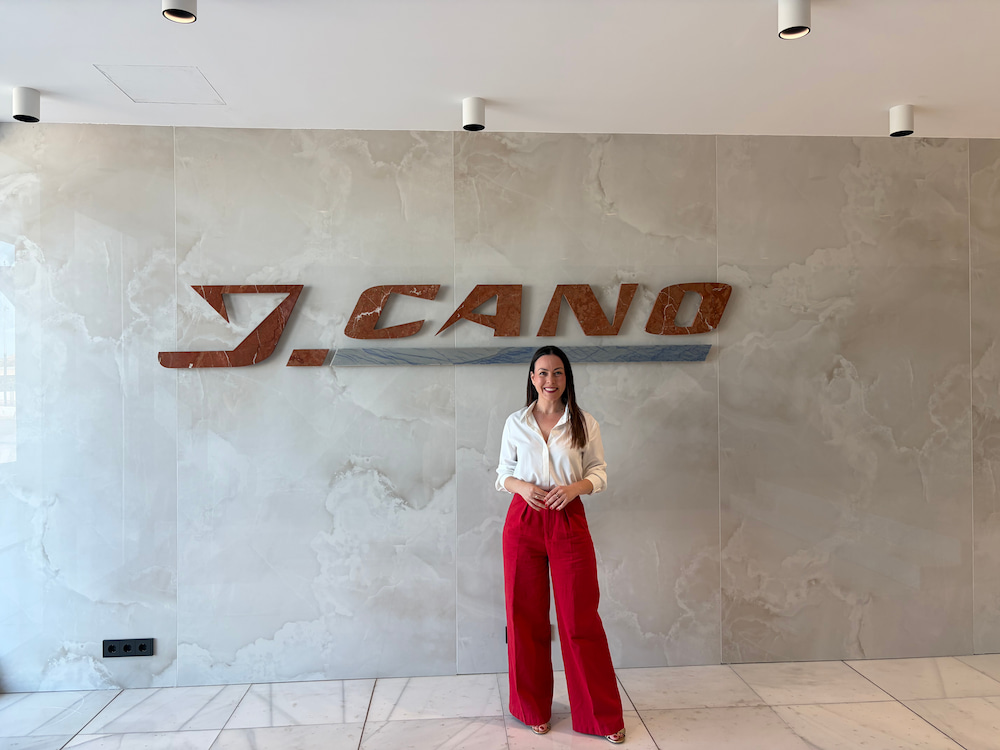
We had the opportunity to speak with Cristina Cano, Director of Operations and an inspiring professional within the transport sector. In this interview, we explore her career, her strategic vision and her perspective on the industry’s challenges and opportunities.
Below, we invite you to discover her thoughts and everything she has shared with us in this conversation.
Personal Journey and Vision
Cristina, your career combines international experience, marketing, and operations leadership. How have these stages influenced the way you lead a transport company today?
I believe every stage of your career helps shape who you become. Working outside Spain helped me understand the importance of adaptability, a global perspective, and the ability to anticipate change.
On the other hand, my education and professional experience taught me something fundamental: behind every operation there are people—clients, teams, collaborators—and understanding their needs is essential.
Today, I apply that vision. It’s not just about moving goods; it’s about building trust, developing relationships, and delivering efficient solutions at the same time.
After several years abroad, what key lessons did you bring back with you when joining the family business?
First of all, my training and experience in sales helped me develop a very customer-focused mindset: listening to clients’ needs and understanding that trust is built by creating strong, solid relationships and providing solutions.
Secondly, managing teams in such a competitive and multicultural environment as London taught me to lead with clarity and measurable objectives. I learned how to organize, motivate, and coordinate people with very different profiles, which later proved essential when I joined the family business.
In addition, mastering the language and living day-to-day in an international environment gave me a more open and flexible perspective. I became accustomed to working to high standards, measuring results consistently, and being more agile in problem-solving.
My goal when joining the company was to combine that family essence with a more modern, strategic vision through the implementation of new software, a future-oriented approach, a people-centered culture, and a presence on social media.
How have you experienced the generational transition within Transportes J. Cano, and what challenges has leading it involved?
With a great sense of responsibility and also a deep respect for the work carried out by my father, who built a company based on hard work, perseverance, and trust.
By respecting those values, we will continue building JCano.
The main challenge is to evolve without losing our essence. To innovate, digitalize, and grow while always maintaining the closeness, commitment, and work culture that define us.
Women and the Transport Sector
Transport has historically been a male-dominated industry. From your experience, what barriers still exist today?
Although the sector has evolved significantly, some barriers still remain.
At times, women still have to prove themselves more in order for their capabilities to be valued equally. There is also still work to be done in terms of work-life balance, visibility, real accessibility to different levels of responsibility, and pay equality.
However, I believe change is already happening, and more and more women are bringing tremendous value to the sector.
Have you noticed a real change in the presence and recognition of women in the sector in recent years? How is that change reflected?
Yes, without a doubt. Today, we see more women leading teams, participating in industry forums, making strategic decisions, and even driving trucks.
Most importantly, it is starting to be seen as something completely natural.
What role do you think female leadership plays in the cultural evolution of logistics companies?
I believe it brings talent, organization, empathy, and a different vision of leadership.
But beyond talking about men or women, I believe the future of leadership lies in more human, collaborative, and approachable models.
Companies need leaders who are capable of listening, connecting, and building trust.
In your public appearances, you have spoken about the importance of empathy and common sense in management. How do you think these skills are helping redefine leadership in the sector?
For a long time, leadership was associated solely with results and authority. Today, we understand that leading also means understanding people.
Empathy does not mean lowering standards; it means managing teams in a smarter and more human way, understanding that we are people—not machines—with feelings and emotions, and that we all experience different personal and professional situations.
In a sector as demanding as transport, where we work under constant pressure, I believe these skills make a significant difference.
Measures and Impact
As Operations Director, what specific initiatives have you implemented to promote the visibility and development of women within the company?
We place great emphasis on equal opportunities and on creating an environment where anyone can grow based on their talent and abilities. For some time now, we have been working on plans and initiatives that promote gender equality.
We also try to give visibility to female role models within the sector because we believe it is important for other women to see themselves reflected and think, “I can do that too,” particularly on International Women’s Day, to cite one example.
Is there any initiative or project in this area that you feel especially proud of? Why?
One of the aspects that has given me the greatest satisfaction in recent years has been being able to contribute to increasing the visibility of the role of women, innovation, and sustainability within the transport sector.
I am especially proud of recently receiving the MIA Award, as it represented recognition not only of my professional career but also of a way of understanding leadership based on transformation, closeness, and the ability to create impact within the sector.
I would also highlight my participation in Michelin’s “More Than a Tire” campaign.
In addition, I have had the opportunity to participate in various forums and events related to transport, logistics, and sustainability.
For me, representing the sector in these spaces is also a responsibility and a way of actively contributing to its transformation.
I am particularly proud to see how more and more women are encouraged to grow professionally within the company and take on new challenges. Helping create an environment where they feel valued is undoubtedly one of the greatest achievements.
How do you work internally to attract female talent in a sector that is not always considered a first career choice?
I believe the key lies in visibility and in showing the reality of today’s sector. Transport has changed enormously: there is more technology, greater professionalism, more development opportunities than many people imagine, and a great deal of room for improvement and innovation.
It is also important to create environments where people feel valued and where they can envision a professional future.
Innovation, Sustainability, and the Future
You have been one of the visible voices in sustainability initiatives, and your company has even received the Third Lean & Green Star. How do these achievements connect with a more inclusive vision of the sector?
Sustainability is not only environmental; it is also social and human. When a company commits to innovation, efficiency, and continuous improvement, it is also building environments that are better prepared to attract diverse talent and new leadership styles.
Our approach to sustainability is closely linked to safety.
I believe that the sectors that evolve are also those that become more open and inclusive.
The transformation of transport relies on digitalization, efficiency, and decarbonization. How do these changes impact the role of women in the sector?
Technological transformation is breaking down many traditional barriers.
Today, the sector requires strategic, analytical, digital, and management profiles, where talent and capability carry far more weight than the old stereotypes traditionally associated with transport, especially as AI is becoming established as a tool for improvement.
This creates enormous opportunities for women.
From your perspective, what type of leadership will logistics companies need in the coming years?
Leadership that is adaptable, approachable, empathetic, and globally minded.
Companies will need people who can manage change, understand technology, make quick decisions, and at the same time take care of their teams.
I believe the future belongs to leaders who know how to combine results with humanity.
Inspiration and Final Message
What advice would you give to companies that have not yet incorporated diversity as a strategic pillar?
I would tell them to understand that it is not just about image or corporate social responsibility—it is about growth and competitiveness.
Diverse teams bring different perspectives, enrich decision-making, and help companies evolve.
What does it mean to you to be a female role model in the sector, and what responsibility does that visibility carry?
I experience it with great gratitude, but also with a strong sense of responsibility.
If my experience or visibility can help another woman take a step forward, embrace a challenge, or have more confidence in herself, then it all makes sense.
To conclude, what message would you like to leave about the future of women in transport?
The future of transport needs talent, vision, and commitment, and those qualities are not defined by gender.
There will be more and more women becoming part of the sector, leading projects, and creating value. And that is great news for everyone. Change has already begun, and I sincerely believe the best is yet to come.
